Good food doesn’t have to be complicated. Sometimes, a healthier way of eating starts with what’s already on your plate.
I recently attended the Farm to Healthcare event at the Culinary Institute at 4Roots Farm in Orlando, Florida. I was introduced to a nutrition program called Full Plate Living, and it quickly caught my interest.
As someone who has spent years working in food systems, nutrition education, and community health, I am always looking for practical ways to help people make healthier food choices without making food feel complicated, expensive, or intimidating.
What stood out to me about Full Plate Living was how simple it is. It uses an idea many of us in nutrition education already value: letting your plate guide you in creating balanced, satisfying meals.
I was so excited about this approach that I couldn’t wait to get home and finish the Full Plate Living facilitator training!
What Is Full Plate Living?
Full Plate Living is a free, nutrition-focused healthy lifestyle program developed by the Ardmore Institute of Health. Its approach motivates people to eat more fiber-rich whole plant foods while making realistic, maintainable changes to their eating habits.
Rather than focusing on strict diets, complicated rules, or lists of foods you can’t eat, Full Plate Living encourages people to think about what they can add to their plates.
More vegetables. More fruit. More beans. More whole grains.
These foods are full of fiber, vitamins, minerals, and other nutrients that support good health. Fiber, in particular, helps with digestion, heart health, and blood sugar control.
The program also recognizes that healthy living involves more than food. The program also includes physical activity, stress management, and building enduring habits.
The American College of Lifestyle Medicine has recognized Full Plate Living as a Certified Lifestyle Medicine Program, adding to its credibility as a resource for nutrition and healthy lifestyle education.
A Familiar Approach: Let Your Plate Be Your Guide
One of the reasons Full Plate Living connected with me is that it builds on something I’ve taught for years: the plate method.
Instead of counting every calorie or measuring every bite, plate methods offer a simple visual to help us think about what we’re eating and how it fits together.
Several well-known nutrition education approaches use this idea:
- USDA MyPlate encourages people to make half their plate fruits and vegetables, with the remaining space divided between grains and protein foods, alongside dairy or a fortified alternative.
- American Heart Association’s Deliciously Balanced Plate encourages a balance of vegetables and fruits, whole grains, and healthy protein sources to maintain heart health.
- American Diabetes Association’s Diabetes Plate provides a visual approach to meal planning, emphasizing nonstarchy vegetables, protein foods, and carbohydrate foods.
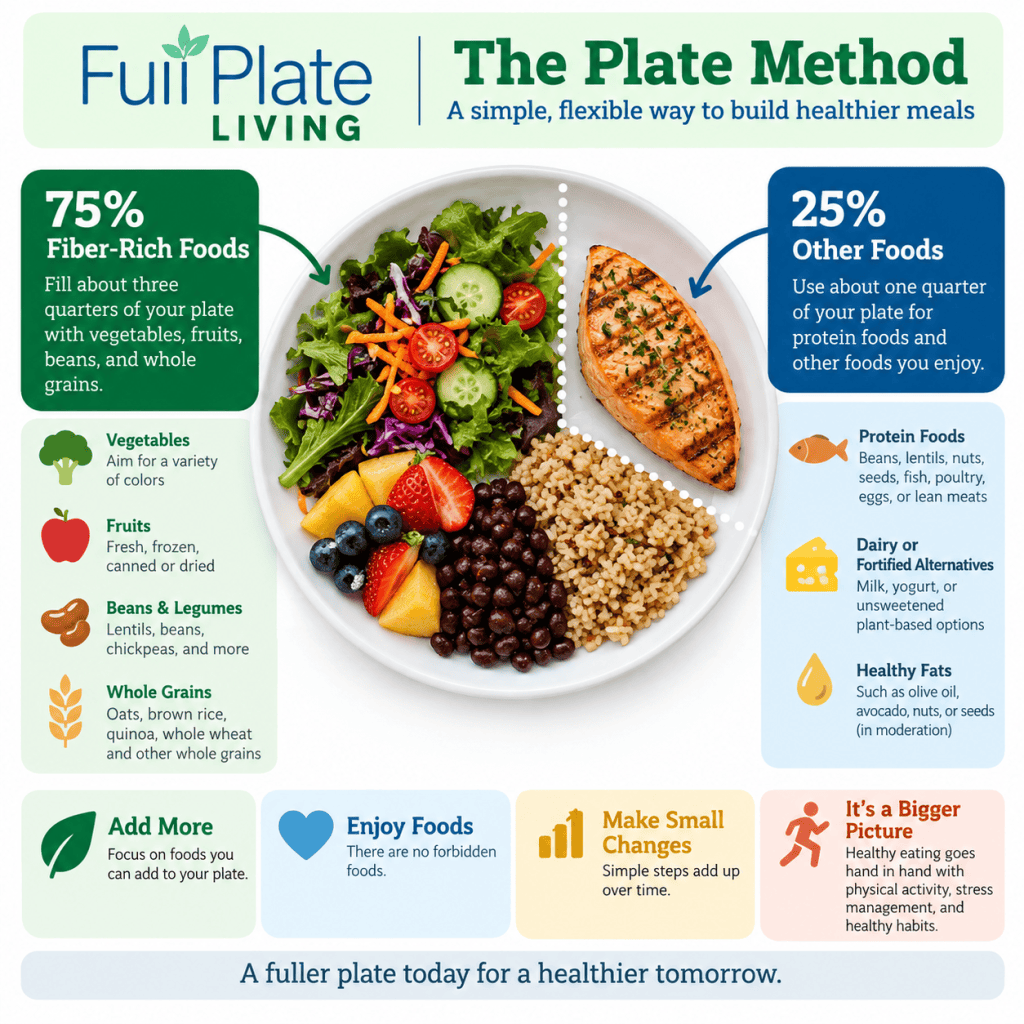
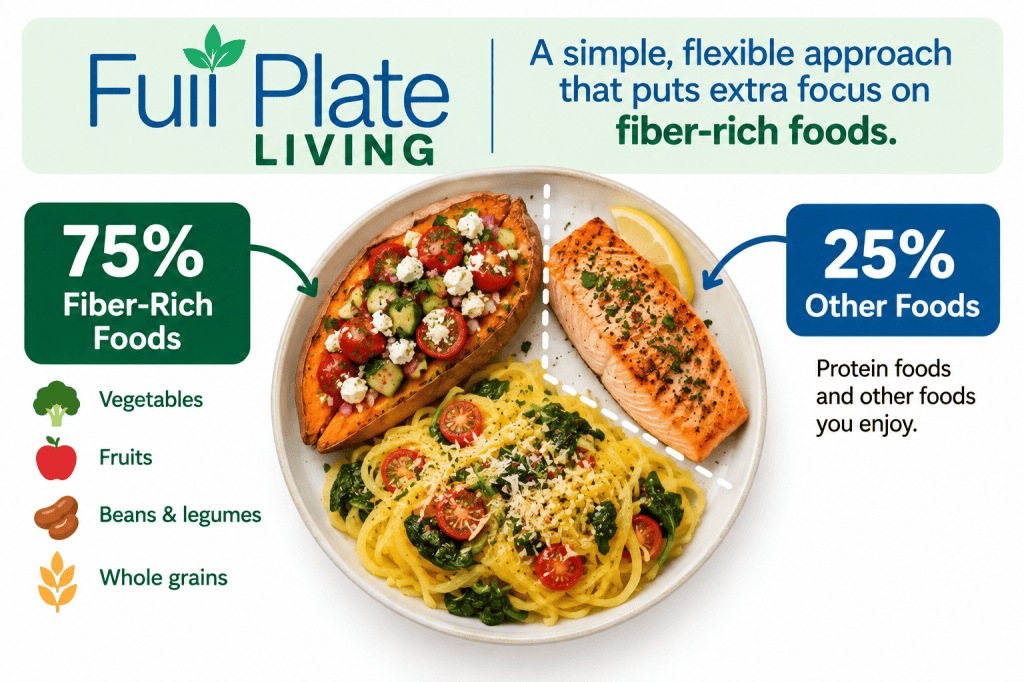
Full Plate Living is just as simple as these other approaches, but it puts extra focus on fiber-rich foods.
Its plate model recommends filling approximately 75% of your plate with fiber-rich foods, such as vegetables, fruits, beans, and whole grains, while leaving room for other foods you enjoy.
These approaches aren’t identical, and each has a slightly different focus. But they share an important message: building a healthier plate doesn’t have to be complicated.
Power Up Your Plate!
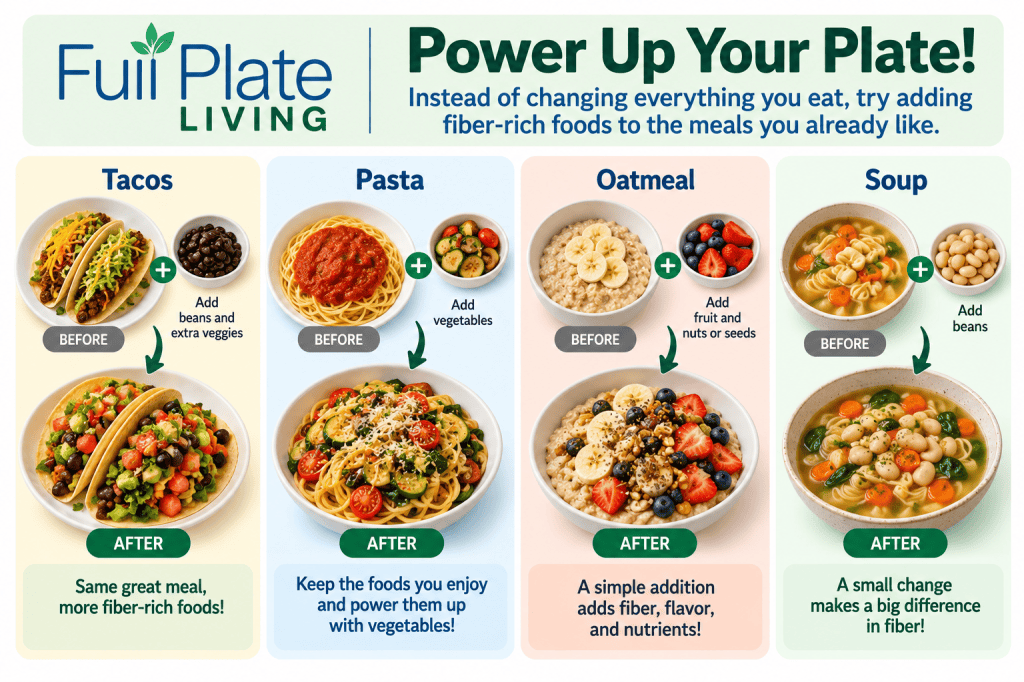
One of my favorite concepts from Full Plate Living is the idea of a “Power Up.”
Instead of changing everything you eat, try adding fiber-rich foods to the meals you already like.
For example:
- Making chili? Add an extra can of beans.
- Having spaghetti? Try whole-wheat pasta or add mushrooms and vegetables to your sauce.
- Eating breakfast? Add berries, sliced bananas, or nuts to your oatmeal.
- Making tacos? Add black beans, lettuce, tomatoes, or other vegetables.
- Enjoying a sandwich? Pair it with fruit or a side of vegetables.
- Cooking soup? Add lentils, beans, or extra vegetables.
You don’t need pricey specialty ingredients or a total kitchen overhaul to make these changes.
Many of these foods—like beans, lentils, oats, frozen veggies, and seasonal produce—are also budget-friendly for families looking to make their money go further.
Small additions may create a meaningful difference over time.
Food Should Be Enjoyable, Not Intimidating
Another thing I like about Full Plate Living is that it doesn’t rely on a long list of foods you can’t have.
That matters to me.
Food is more than just nutrients. It’s about culture, tradition, family, community, and enjoyment. Healthy eating advice should recognize that.
Too often, nutrition advice makes people feel like they have to give up everything they love to be healthy. That can be discouraging, especially for those dealing with tight budgets, busy schedules, or trouble finding fresh foods.
Full Plate Living gives people a different place to start.
Instead of asking, “What do I need to stop eating?” we can ask, “What could I add to make this meal a little more nourishing?”
That’s a question almost anyone can start to answer, no matter how much cooking experience they have.
Taking What I’ve Learned Back to My Community
After coming home from the Farm to Healthcare event, I finished the Full Plate Living facilitator training. The training reinforced many principles I value in community nutrition education, like meeting people where they are, helping them set achievable goals, and supporting progress through small, realistic changes.
It also introduced resources for leading group learning, encouraging meaningful conversations, and helping people build habits that fit their lives.
I’m excited to have another tool in my nutrition education toolbox and look forward to sharing these resources through my How to Eat Good! work and community partnerships.
At the end of the day, nutrition education should help people feel more confident and capable of feeding themselves and their families.
Ready to Fill Your Plate?
You don’t have to change everything about how you eat to get started.
Next time you sit down for a meal, look at your plate. Can you add some vegetables, a scoop of beans, a piece of fruit, or a whole grain?
Start with that.
And if you’re interested in learning more, Full Plate Living offers free resources, recipes, and educational programs to help you along the way.
Explore Full Plate Living: https://www.ardmoreinstituteofhealth.org/full-plate-living
“You don’t have to be a good cook to eat good. You just need a place to start.”
Full Plate Living gives you another simple place to begin.
Rooted in community. Inspired by good food.
References & Additional Resources
The following resources were used to inform this article and offer additional information about Full Plate Living, balanced eating, and practical approaches to nutrition.
– Ardmore Institute of Health. Full Plate Living. Free nutrition education resources, recipes, and programs focused on increasing fiber-rich foods and building sustainable healthy habits.
– Ardmore Institute of Health. American College of Lifestyle Medicine Designates Full Plate Living a Certified Lifestyle Medicine Program. Information about the program’s recognition and evidence-informed approach to lifestyle medicine.
– U.S. Department of Agriculture (USDA). MyPlate. Practical guidance for building balanced meals using the five food groups.
– American Heart Association. Deliciously Balanced Plate. A visual guide to building heart-healthy meals with vegetables, fruits, whole grains, and healthy proteins.
– American Diabetes Association. What Is the Diabetes Plate?. A simple plate-based approach to meal planning that supports balanced nutrition and blood sugar management.

