Freezing is one of the simplest and most effective ways to preserve food. When done correctly, it helps maintain both nutrition and flavor while reducing waste. Frozen foods remain safe to eat indefinitely when stored at 0°F (-18°C) — but quality does decline over time. The key to keeping foods fresh and tasty in the freezer is proper packaging and labeling.
Why Packaging Matters
The freezer halts bacterial growth, but air and moisture are the enemies of quality. Without the right materials, frozen foods can suffer from freezer burn, dehydration, and off-flavors. That’s why it’s important to use packaging designed specifically for freezer storage.
Best Packaging Options
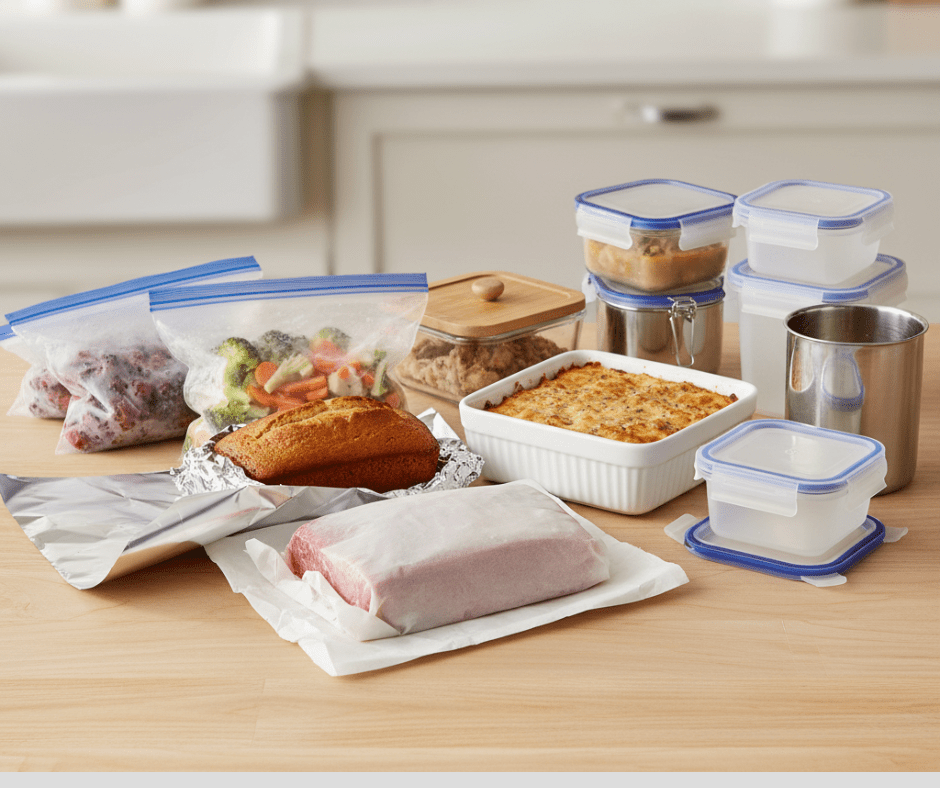
Suitable freezer wrapping materials include:
- Freezer paper – Moisture- and vapor-resistant, ideal for meats and baked goods.
- Plastic freezer bags – Flexible and space-saving; be sure to press out excess air before sealing.
- Freezer aluminum foil – Great for wrapping solid items, casseroles, and baked goods.
Always check the packaging label to ensure it’s marked “freezer-safe” or “moisture-vapor resistant.” Regular plastic wraps, sandwich bags, and thin foil don’t provide adequate protection for long-term storage.
Rigid Containers for Freezing
There are also many rigid freezer-safe containers made from:
- Metal
- Foil
- Plastic
- Glass
- Ceramic
Each has its benefits, but it’s essential that they’re labeled as freezer-safe. Containers not meant for freezing (like milk or cottage cheese cartons) are not moisture- or vapor-resistant enough to prevent freezer burn.
Additional tips:
- Leave headspace in containers for foods that expand as they freeze, such as soups and sauces.
- Avoid reusing foil containers — they’re single-use only.
- Consider dual-purpose containers that are both freezer- and microwave-safe if you plan to reheat directly from the freezer.
- Choose container sizes wisely. Smaller containers work best for individual or meal-size portions, helping prevent waste and reduce thawing time.
Freezing Safety Reminders
- Keep your freezer at 0°F or below for best results.
- Label and date each package before freezing — this helps you rotate and use older items first.
- For best quality, most frozen fruits and vegetables are best used within 8–12 months, while meats and casseroles are best within 3–6 months.
- Never refreeze thawed food unless it still contains ice crystals or was kept below 40°F.
Learn More from these References
- U.S. Department of Agriculture, Food Safety and Inspection Service (USDA FSIS). (2024). Freezing and Food Safety.
- National Center for Home Food Preservation, University of Georgia. (2024). Freezing and Food Storage Guide.
- University of Kentucky Cooperative Extension Service. (2023). Home Food Preservation: Freezing Basics (FCS3-332).
- U.S. Department of Agriculture. (2023). Tips for Freezing Food.
 How to Eat Good!